
Explore iconic landmarks and hidden gems across Bago.
Savor authentic Bago cuisine, from street food favorites to gourmet delights.
Find top-rated hotels and cozy stays for every kind of traveler.
Bago Region is located between Mandalay Region and Magwe Region. The population is about 3.800.240. Bago Region is the major rice producing area in Myanmar. Its main occupation is agriculture. growing paddy. sesame. groundnut. pulses. jute. rubber. tobacco and sugarcane.

Kyaikpun Paya Pagoda is a colossal four-sided Buddha image built around a central brick core. Although the monument has been rebuilt many times, it was originally built in 1476 by King Dhammazedi (r. 1471-92), the 16th king of the Hanthawaddy, as part of a program to recreate the major Buddhist pilgrimage sites in India on his kingdom's own soil.The four-sided Buddha is a familiar theme in Southeast Asian art.

One of the most revered sites in Bago as well as the rest of Myanmar is the Shwemawdaw Pagoda. The name translates to “Great Golden God” and was built in 10th century and just happens to be the tallest pagoda in Myanmar. Standing at a height of 114 meters (374 feet) it is over 15 meters higher than the famous Shwedagon Pagoda in neighboring Yangon. It was built to enshrine relics of the Buddha, including two strands of hair being gifted by Gautama himself during his lifetime.

Kanbawzathadi Palace is a palace in Bago, Myanmar. The original palace, built for King Bayinnaung in 1556, consisted of 76 apartments and halls. It was burned down in 1599. The current building was reconstructed in 1990 and finished in 1992.[1] It was rebuilt following the original design, based on knowledge gained from excavations and the original drawings of the building. The huge palace consisted of 76 apartments and halls.

This Myanmar reclining Buddha is so big that from looking up from the bottom steps it’s impossible to determine exactly what’s ahead of you. The golden slap you see is only the torso. Measuring 55 m long and 16 m high and Myanmar Shwethalyaung Pagoda is 9 m longer than the reclining Buddha at Wat Pho in Bangkok, but still 19 m short of the Myanmar Buddha in Dawei.
The Mahazedi Paya ranks among the most sacred sites in Bago, second only to the Shwemawdaw Pagoda. First established in 1559 or 1560, it reputedly houses (or once housed) a tooth relic from Sri Lanka, the gift of King Dharmapala of the Kotte kingdom.The pagoda was the creation of King Bayinnaung of Burma's Toungoo dynasty, who ruled from 1550-81.
To improve the community-based tourism and to create job opportunities for residents, Winga Baw elephant camp was established on 3rd November in 2016. The elephant camp is located in PhayarGyi Township, east of Bago Region.The camp was located in Phayargyi township near Bago city where can access from Yangon-Mandalay Old road and Yangon-Mandalay express road 39 mile Junction.
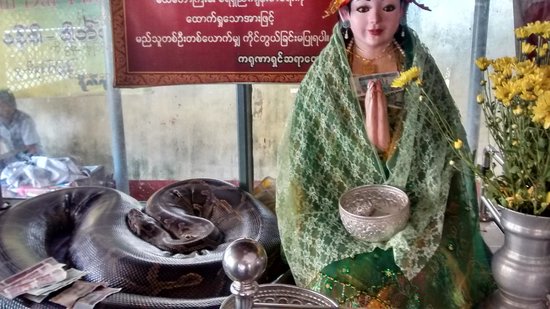
The Snake Pagoda, officially named Yadana Labamuni Hsu-taungpye Paya, is a Buddhist temple in Bago, Myanmar, renowned for its resident giant pythons. These snakes, considered sacred, are cared for by monks who feed them milk, eggs, and goat meat every five days. The temple was established in 1974 when a monk discovered two large pythons coiled around a Buddha statue; they returned daily, leading the monks to believe they were reincarnated souls of former monks.
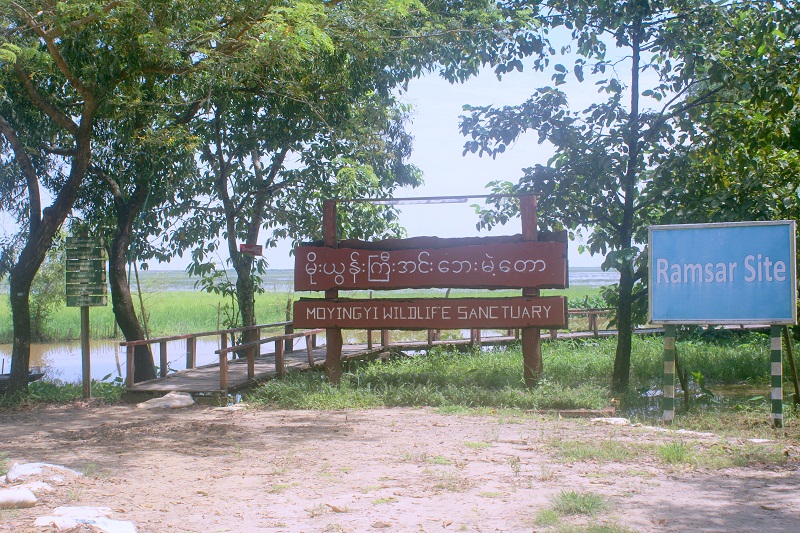
The Bago Region Government has revealed that efforts are underway to designate the Moeyungyi Wetland Wildlife Sanctuary in Bago Township, Bago Region, as an ASEAN Heritage Park.In support of this designation, initiatives will be implemented to raise public awareness about the sustainable use of Moeyungyi Lake’s wetland resources and ecosystem services.
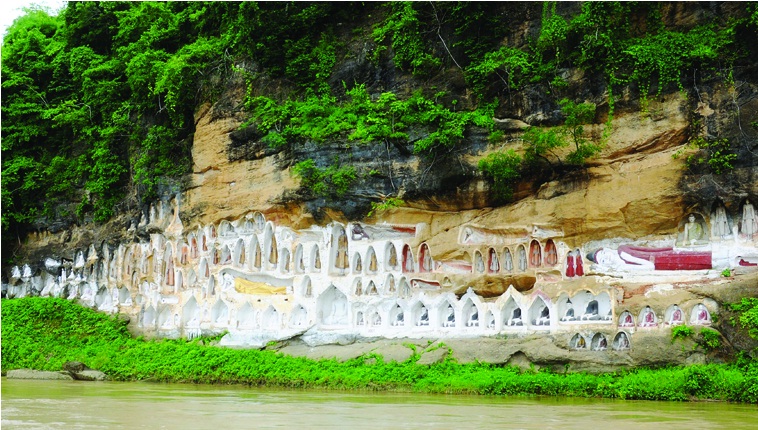
To reach the site you will first need to hire a motorbike in Pyay for the ride to Akauk Taung, some two hours away. While you could in theory ride this yourself, there is almost no signposting and the final turn off the main road is not signposted in English at all.
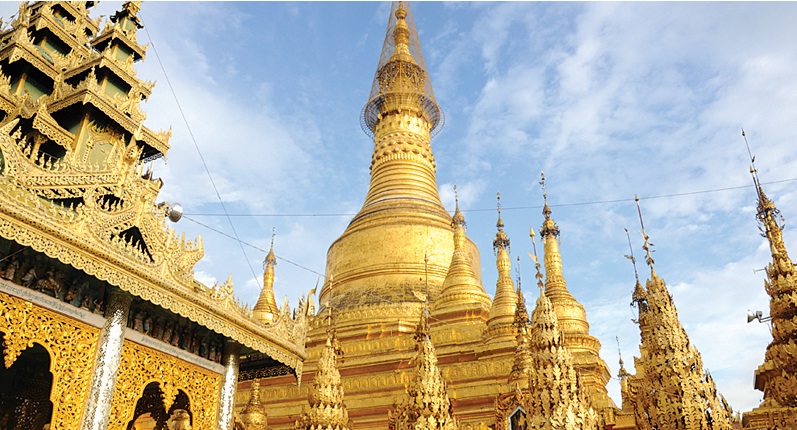
The Shwesandaw Paya Pagoda is located on a hill in the southwest side of Pyay, about 850 meters inland from the east bank of the Irrawaddy river.
A popular Myanmar street snack of small crispy rice flour pancakes, usually filled with quail eggs, chickpeas, or spring onions.
A traditional Myanmar steamed snack made from glutinous rice flour, jaggery, and shredded coconut, soft and sweet in flavor.
Myanmar’s national dish—a flavorful rice noodle soup with fish broth, lemongrass, banana stem, and crispy fritters, eaten mainly for breakfast.
Chapati and Dhal curry are Indian and Pakistani dishes, not traditional Burmese food, and are rarely found in local Bago restaurants.
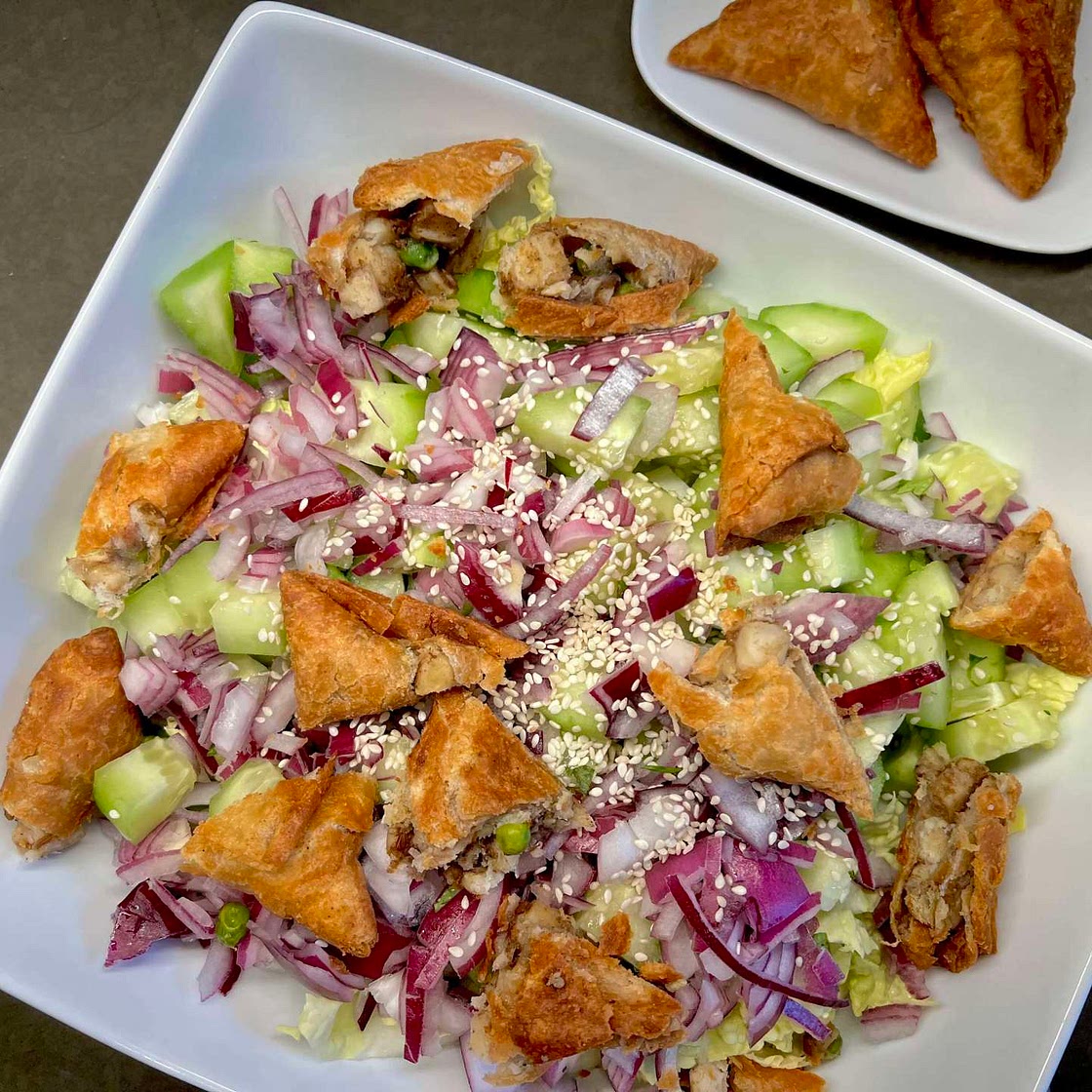
Samosa salad is a Burmese street food dish in Myanmar, including Bago, with quartered samosas tossed with onions, cilantro, tomatoes, and tamarind dressing.
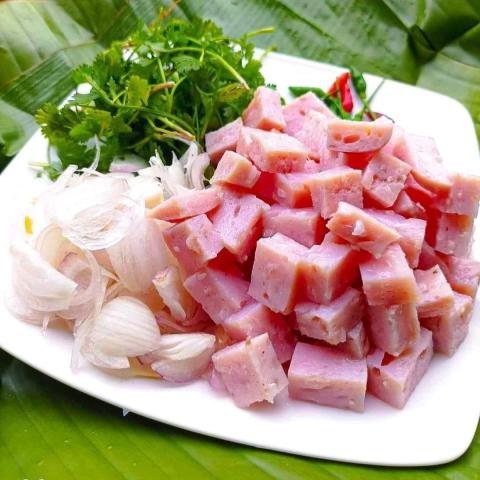
A traditional Myanmar delicacy of shrimp fermented with rice, garlic, and spices, giving it a tangy, savory flavor often eaten with rice.

Kanbawza Hinthar Hotel
3-star hotel
Located in Bago

The Pegu Lodge
3-star hotel
Located in Bago

Han Thar Gardens Resort
3-star hotel
Located in Bago

KMA SHWE PYI BAGO RESORT
3-star hotel
Located in Bago

Hotel Ksetra
3-star hotel
Located in Pyay

Golden Guest Hotel
3-star hotel
Located in Pyay

Pun Swe Taw Hotel
3-star hotel
Located in Taungoo

KMA Kaytumadi Hotel
4-star hotel
Located in Taungoo

Myanmar Beauty Hotel 2
3-star hotel
Located in Taungoo

Bago Yoma Eco Resort
3-star hotel
Located in Pyay